Unit 3 · Topic 3.12 · about 30 minutes · 7 parts · 9 scored checks, 2 of them multiple choice, plus 2 from earlier lessons
AP U.S. Government and Politics 3.12: Balancing Minority and Majority Rights
Unit 3: 13 to 18% of the multiple-choice section
What you'll be able to do
- Explain how the government has at times allowed the restriction of the civil rights of minority groups and at other times has protected those rights.
Key vocabulary
| Term | What it means | The exam trap |
|---|---|---|
| Emancipation Proclamation | Lincoln's wartime executive proclamation declaring freedom for enslaved people in designated areas in rebellion. | Read the geographic exceptions and legal authority. |
| Thirteenth Amendment | The constitutional abolition of slavery and involuntary servitude, with an exception for punishment after criminal conviction. | Constitutional scope differs from a wartime order's territorial reach. |
| Separate but equal | A historical doctrine permitting enforced racial separation while claiming equivalent facilities. | State the historical setting rather than treating it as current education law. |
| Majority-minority district | An electoral district in which a racial or ethnic minority group forms a majority of the population. | Population composition alone does not explain the boundary-drawing process. |
| Strict scrutiny | Judicial review requiring a compelling governmental interest and narrow tailoring. | Identifying the test does not establish that a challenged policy passes it. |
 Tap to open the picture full size
Part 1 Think first Predict the institutional consequence
Compare relevant facts and majority reasoning. Different outcomes alone do not explain why constitutional protection changed.
Predict first
A presidential wartime declaration announces freedom. Which evidence would establish its precise legal reach?
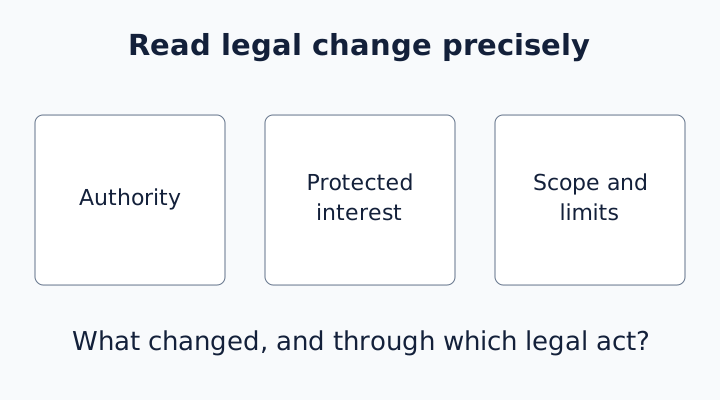
In short. American civil-rights protections have changed through executive action, amendments, statutes, and judicial decisions with different scopes.
- Identify the legal authority and actual scope of each measure.
- Compare the reasoning behind historical restriction and later protection.
- Distinguish district composition from unconstitutional racial sorting.
Part 2 Learn it A wartime proclamation has a defined reach
2a. A wartime proclamation has a defined reach
Abraham Lincoln issued the Emancipation Proclamation on January 1, 1863, using his authority as commander in chief during the Civil War. Its text declares freedom for enslaved people in designated states and parts of states in rebellion. It expressly excepts specified areas; slaveholding border states loyal to the Union were outside its reach. Implementation also depended on Union military advance. Do not turn its broad commitment to freedom into a claim that the document instantly abolished slavery everywhere. Emancipation Proclamation, transcript.
Source excerpt: Lincoln identifies the measure as an act “warranted by the Constitution, upon military necessity.” This connects the asserted legal authority to the wartime setting. The Thirteenth Amendment, ratified in 1865, permanently abolished slavery and involuntary servitude throughout U.S. jurisdiction, except as punishment for a crime after conviction. Thirteenth Amendment, section 1. The amendment changed the constitutional rule rather than merely extending the proclamation's list of places. Neither document alone established every later civil-rights protection. Their different authorities and reach explain both the shift toward freedom and the need for further guarantees.
Quick check · Fill the statement
Complete the explanation using the specific legal mechanism.
The proclamation asserted wartime authority; permanent constitutional abolition followed through the .
2b. A historical doctrine can restrict rights
After emancipation, state laws still restricted African Americans' access to public facilities and opportunities. Plessy v. Ferguson (1896) upheld a state law imposing racial separation in railway travel under the historical separate-but-equal doctrine. That reasoning permitted legal separation despite its restrictions on minority access. This describes a historical holding, not current public-education law. Plessy, majority opinion, pages 543-552.
In Brown v. Board of Education (1954), Black children challenged state-imposed racial segregation in public schools. The unanimous Court rejected separate but equal in public education: separate educational facilities are inherently unequal because enforced racial separation harms equal educational opportunity. Brown, majority opinion, pages 493-495. Compare the supplied Plessy summary with Brown by identifying the relevant facts, common constitutional issue, and different reasoning. Both involved state-imposed racial separation and equal protection. Their settings differed, railway travel and public schools, and Brown rejected the sufficiency of tangible equality in education. A useful comparison explains the change rather than merely labeling one case restrictive and another protective.
For comparison, the Emancipation Proclamation was a geographically qualified wartime executive action. The Thirteenth Amendment established permanent constitutional abolition throughout U.S. jurisdiction, with its stated criminal-punishment exception.
Quick check · Fill the statement
Complete the explanation using the specific legal mechanism.
The supplied historical railway case is ; the decision rejecting separate but equal in public education is .
2c. Race in districting raises another equal-protection dispute
In Shaw v. Reno (1993), North Carolina residents challenged an unusually shaped congressional district drawn to create a second majority-Black district after federal objections to an earlier plan. The issue was whether the alleged race-based sorting stated an equal-protection claim. The Court held the voters had stated a claim and remanded for further proceedings. The majority reasoned that racial classifications can reinforce stereotypes and signal that representatives serve a racial group rather than their whole constituency. Allegations of a district unexplainable on grounds other than race required strict scrutiny: a compelling governmental interest and narrow tailoring. Shaw, majority opinion, parts III and IV.
This permits voters, including majority-group voters, to challenge unconstitutional racial classifications. It does not categorically prohibit every majority-minority district, decide that every unusual shape is unlawful, or resolve the ultimate merits of that map in Shaw itself. Protecting voting rights and complying with equal protection both constrain districting. A majority-minority district describes population composition; the constitutional issue concerns how and why boundaries were drawn. Distinguish a challenge the Court allows from a universal ban the Court did not announce.
Quick check · Fill the statement
Complete the explanation using the specific legal mechanism.
Shaw permitted an challenge to racial sorting; it the case for further proceedings.
Part 3 Watch it done Compare Brown with a supplied unfamiliar case
Non-required case summary supplied: Plessy v. Ferguson (1896) involved state-mandated racial separation in railway cars. The majority accepted separate but equal and upheld the law, reasoning that legally imposed separation did not itself establish forbidden inequality. Compare that summary with Brown's required majority reasoning. Read the supplied Plessy majority source, pages 543-552.
Step 1 · Select relevant facts and issue
Both involve government-imposed racial separation and equal protection. The supplied case concerns railway travel; Brown concerns public education.
Why this step?
Why is saying that the cases have opposite outcomes insufficient?
Comparison needs the reasoning that produced the difference. Brown treated separation itself as harmful to equal educational opportunity rather than relying only on tangible equality.
Step 2 · Connect the reasoning to the constitutional issue
The common clause does not require identical reasoning across historical decisions. Brown rejects the separate-but-equal doctrine in public education and explains why the separation violates equal protection.
Your step · Decide and justify
Which comparison accounts for both the facts and reasoning?
Which legal reason supports your conclusion?
A contrasting worked example
Source contrast: the Emancipation Proclamation excepts named areas while the Thirteenth Amendment establishes a constitutional prohibition throughout U.S. jurisdiction. Step 1: locate the proclamation's asserted wartime authority. Step 2: identify its geographic qualifications. Step 3: compare the amendment's nationwide constitutional reach, including its stated criminal-punishment exception. This explains why the proclamation was consequential without claiming it completed nationwide abolition.
Part 4 Try it Test the boundaries in new situations
Original teaching situations: distinguish what each institution can do.
Try it · Sort it
Classify the authority and change described.
Executive wartime action
Constitutional amendment
Historical judicial restriction
Judicial protection or review
Part 5 Explain it Write, then compare with the model
Free response is 50% of the exam score. This one is shaped like Question 3, SCOTUS Comparison.
Free-response practice · Question 3 style
Original SCOTUS-comparison practice. Use the supplied Plessy summary and Brown discussed above. (A) Identify their common constitutional clause. (B) Explain a relevant factual similarity and a factual difference. (C) Explain how their majority reasoning differs and how that difference affected minority rights. Then add one sentence distinguishing Shaw's recognition of a districting claim from a categorical ban.
Model answer
Both cases concern the Equal Protection Clause. Both involve state-imposed racial separation, but Plessy concerns railway cars and Brown concerns public schools. The supplied Plessy majority accepted separate but equal, allowing legal separation in that setting. Brown treated enforced racial separation itself as harmful to equal educational opportunity, so tangible equality could not cure it. The difference allowed a constitutional challenge to the exclusion of Black children from nonsegregated public education. Shaw separately recognized an equal-protection challenge to alleged unconstitutional racial sorting and remanded; it did not declare every majority-minority district invalid.
Score your own answer. This is a self-check, not a grade. Tick each point your answer makes.
Part 6 Check yourself Read authority and limits together
Source-based comparison, paraphrased from the linked primary texts. No row is a quotation.
| Measure | Authority or holding | Important scope |
|---|---|---|
| Emancipation Proclamation | Commander-in-chief wartime action | Designated areas in rebellion, with exceptions |
| Thirteenth Amendment | Ratified constitutional rule | Nationwide abolition, with criminal-punishment exception |
| Shaw v. Reno | Voters stated an equal-protection claim | Remand and strict scrutiny of alleged racial classification |
Case question 1 · Multiple choice
Which conclusion best follows from the first two rows?
Case question 2 · Multiple choice
What conclusion about a new majority-minority district is consistent with Shaw?
The rest stand on their own and do not use the case.
Check yourself · Spot the error
Select the statement that makes an institutional error.
Check yourself · Match
Match each legal concept to its defining feature.
Part 7 Keep it Retrieve and connect
From 3.11 Government Responses to Social Movements · Fill the statement
Complete the explanation using the specific legal mechanism.
Brown applied the Fourteenth Amendment's guarantee to state-imposed racial segregation in .
From 3.10 Social Movements and Equal Protection · Fill the statement
Complete the explanation using the specific legal mechanism.
King linked nonviolent direct action to creating conditions for ; the letter's argument challenged indefinite .
In three lines
- Identify the legal authority and actual scope of each measure.
- Compare the reasoning behind historical restriction and later protection.
- Distinguish district composition from unconstitutional racial sorting.
Exam strategy for this topic
- Section I, Multiple Choice: 55 questions in 80 minutes.
- Section II, Free Response: 4 questions in 100 minutes.
- This lesson's Explain it is shaped like free-response question 3, SCOTUS Comparison.
Compare relevant facts and majority reasoning. Different outcomes alone do not explain why constitutional protection changed.
Questions students ask
Did the Emancipation Proclamation end slavery everywhere?
No. It applied to designated areas in rebellion, with express exceptions. The Thirteenth Amendment later established permanent constitutional abolition nationwide, with its stated criminal-punishment exception.
Was Brown about railway cars?
No. Brown concerned public schools. The supplied Plessy summary concerns railway travel and serves as a historical comparison.
Does Shaw prohibit every majority-minority district?
No. It allowed an equal-protection claim concerning alleged unconstitutional racial classification and remanded. Population composition alone is not a universal constitutional prohibition.
Does equal protection protect only minority voters?
No. It protects persons. Shaw illustrates that majority-group voters can also challenge alleged unconstitutional racial classifications.
Course alignment, for teachers
AP U.S. Government and Politics topic 3.12, Unit 3: Civil Liberties and Civil Rights.
- Skill 2.C: Explain how the facts, issue, holding, reasoning, decision, and majority opinion of a required Supreme Court case compare to a non-required Supreme Court case.
This lesson maps the one essential knowledge statement of the topic to the part that teaches each one: 1 is checked by a scored question. The map is in the lesson file.