Unit 5 · Topic 5.6 · about 30 minutes · 7 parts · 10 scored checks, 2 of them multiple choice, plus 2 from earlier lessons
AP Environmental Science 5.6: Pest Control Methods
Unit 5: 10 to 15% of the multiple-choice section
What you'll be able to do
- Describe the benefits and drawbacks of different methods of pest control.
Key vocabulary
| Term | What it means | The exam trap |
|---|---|---|
| Pest | An organism that damages crops or stored food. | A pest can be a plant, a fungus or an animal, not only an insect. |
| Pesticide | A substance used to kill or control pests. | It is the general term; herbicides and insecticides are kinds of pesticide. |
| Genetically engineered crop | A crop whose genes people have changed in a laboratory. | Engineering changes the crop's genes, not only how it is grown. |
| Genetic diversity | The variety of genes within one species. | It is variety within one species, not the number of species. |
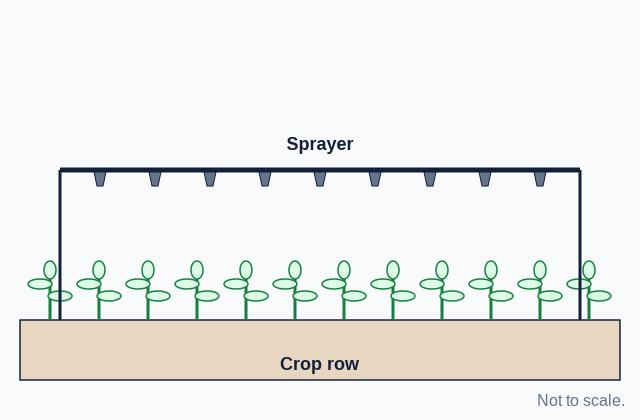 Tap to open the picture full size
Part 1 Think first The spray that stopped working
Commit to a guess first. Being wrong now makes the right idea stick better.
Predict first
A farmer sprays the same insecticide on a cornfield every summer, the same amount each time. The first summer it kills nearly all the corn beetles. By the sixth summer, many beetles live through the spraying. What do you predict happened?
In short. Pest control decreases the damage pests do to crops and increases crop yields, but each method has drawbacks.
- Common pest-control methods include herbicides, fungicides, rodenticides and insecticides, all kinds of pesticide.
- Crops can also be changed in a laboratory to stand up to pests and diseases.
- This lesson weighs what each approach gains and what it can cost.
Part 2 Learn it Controlling pests, and what it costs
2a. What pest control does
A pest is an organism that damages crops or stored food. Common pest-control methods include pesticides, herbicides, fungicides, rodenticides, and insecticides. Plain meanings, from the words themselves: pesticide is the general term for a substance used against pests, and the others are kinds of pesticide, each aimed at one kind of pest:
- herbicides at weeds, the unwanted plants that crowd a crop;
- fungicides at fungi, such as molds and mildews;
- rodenticides at rodents, such as rats and mice;
- insecticides at insects, such as beetles and aphids.
Pest control decreases crop damage by pests and increases crop yields. Fewer leaves eaten, fewer roots chewed and less grain spoiled in storage mean more food from the same field. That benefit is why farmers use it.
The drawbacks come next: what happens to the pests over time, and what happens to a crop engineered to resist them.
Quick check · Multiple choice
A mold is rotting the potatoes stored on a farm. Which kind of pest-control product is aimed at it?
2b. How pests become resistant
One consequence of using common pest-control methods is that organisms can become resistant to them through artificial selection.
It happens over generations. Take a field of aphids sprayed with an insecticide:
- The aphids vary. A few happen to carry a trait that helps them survive the spray.
- The spray kills most of the aphids. The few with the trait live.
- The survivors breed and pass the trait to their young.
- Spray again and again, and each generation has a larger share with the trait. The insecticide kills fewer of them.
It is called artificial selection because people, by spraying, decide which aphids survive to breed. The spray does not create the trait or change any aphid's genes; it removes the aphids without it. The same thing happens to weeds sprayed with an herbicide, fungi with a fungicide and rats with a rodenticide.
Quick check · Decide and justify
A farmer's insecticide kills fewer of a field's beetles each year. A neighbor says that switching to a stronger dose of the same insecticide will solve the problem for the years ahead. Is the neighbor right?
Which reason supports your answer?
2c. Engineered crops
Crops can be genetically engineered to increase their resistance to pests and diseases. A genetically engineered crop is one whose genes people have changed in a laboratory. A corn plant can be given a gene that makes its leaves toxic to a caterpillar, for example, so the caterpillars do less damage.
However, using genetically engineered crops in planting or other ways can lead to loss of genetic diversity of that particular crop. Genetic diversity is the variety of genes within one species, here one crop. When many farms switch to the same engineered variety, the older varieties they grew before are planted less, and some may stop being planted at all. The crop's genes become more alike from field to field.
Background: a crop whose plants are alike can be hit all at once by a new pest or disease that none of its plants resist. Unit 2 treats genetic diversity in wild species.
Quick check · Select all
Most farms in a made-up region switch from many older wheat varieties to one engineered variety that resists a fungus. Which two are likely results? Pick two.
Select 2 answers, then check.
Part 3 Watch it done How many weeds live through the spray?
Open each step in turn, answer the why, then finish the calculation yourself.
When a made-up farm first used an herbicide, only 2% of a weed's seedlings survived it. Years later, the farm sprays a test plot of 4,800 seedlings of the same weed, and 1,104 survive. What percent survived?
Step 1 · Pick the part and the whole
The part is the 1,104 seedlings that survived. The whole is all 4,800 sprayed.
Why this step?
Why compare the answer with the 2% of the first year?
The herbicide is the same. A higher share surviving now means the weed population has changed: survivors bred, and more of today's weeds carry the trait that lets them live through the spray.
Step 2 · Set up the percent
Divide the survivors by the seedlings sprayed, and multiply by 100.
Your step · Calculate
Finish it. A made-up farm sprays a test plot of 4,800 weed seedlings with an herbicide, and 1,104 survive. What percent of the seedlings survived?
%
Survival rose from 2% to 23% with the same herbicide. Nothing in the spray changed; the weeds that could survive it made the seeds for each new crop of weeds.
Part 4 Try it Order the steps, then check an account
First put the steps of resistance in order. Then find where a student's account of pest control goes wrong.
Try it · Put it in order
A rodenticide is set out in a grain store year after year. Put the steps by which the rats become resistant in order, first to last.
Try it · Spot the error
A student explains the benefits and drawbacks of pest control. Tap the first line that goes wrong.
Part 5 Explain it One corn, fewer kinds
Write your answer first. Nothing you type here leaves this page. Then compare it with the model and each scoring point.
Free response is 40% of the exam score. This one is shaped like Question 2, Analyze and interpret quantitative data.
Free-response practice · Question 2 style
A made-up farming region began planting a corn variety engineered to resist a root-eating beetle. The data below are made up for practice.
- 2000: 40 corn varieties planted; 0% of corn land in the engineered variety; 12% of the corn crop lost to the beetle
- 2010: 18 corn varieties planted; 55% of corn land in the engineered variety; 5% of the corn crop lost to the beetle
- 2020: 8 corn varieties planted; 85% of corn land in the engineered variety; 3% of the corn crop lost to the beetle
(a) Describe how the share of the corn crop lost to the beetle changed as the engineered variety spread.
(b) Calculate the percent decrease in the number of corn varieties planted from 2000 to 2020. Show your work.
(c) Explain how the spread of the engineered variety could account for the change you calculated in (b).
(d) Propose one way the region could keep more genetic diversity in its corn while still protecting its crop from the beetle, and explain how it would work.
Model answer
(a) As the engineered variety's share of corn land rose from 0% to 85%, the share of the crop lost to the beetle fell from 12% to 3%.
(b) fewer varieties. decrease.
(c) As more farms planted the one engineered variety, they stopped planting the older varieties they grew before, so fewer varieties were planted and the region's corn lost genetic diversity.
(d) Engineer the beetle resistance into several different varieties instead of one, so farms can protect their crop while still growing many kinds of corn. Or keep some land in older varieties, so their genes stay in the region's crop.
Score your own answer. This is a self-check, not a grade. Tick each point your answer makes.
Part 6 Check yourself Five summers of one fungicide
The first two questions use the table.
Mildew, a fungus, grows on the leaves of a made-up vineyard's grapevines. The vineyard sprays the same fungicide each summer, the same amount each time. Each summer it also sprays a test dish of 200 mildew spores taken from its vines and counts the percent that still grow, and it records the grape yield. The numbers are made up for practice.
| Summer | Mildew spores surviving the test spray (%) | Grape yield (metric tons per hectare) |
|---|---|---|
| 1 | 2 | 9.6 |
| 2 | 5 | 9.5 |
| 3 | 12 | 9.2 |
| 4 | 26 | 8.5 |
| 5 | 45 | 7.6 |
Case question 1 · Multiple choice
Using the table: which best explains the change in the mildew surviving the test spray?
Case question 2 · Calculate
Using the table: by what percent did the grape yield fall from summer 1 to summer 5?
The rest stand on their own and do not use the case.
Check yourself · Fill the statement
Complete the description of a farmer's pest control.
The farmer sprays to kill the weeds crowding a soybean crop, and sets out to kill the mice eating the stored grain.
Check yourself · Sort it
Is each result a benefit or a drawback of pest control or of engineered crops? Tap a card, then its group.
Benefit
Drawback
Part 7 Keep it Bring back earlier ideas
Two questions from earlier topics: how much water three irrigation types lose, and a student's account of the Green Revolution's results.
First rank three irrigation types by the water they lose. Then find where a student's account of salty farm soil goes wrong.
From 5.5 Irrigation Methods · Rank it
Rank these three irrigation types by the share of their water lost to evaporation and runoff.
Largest share lost first
Give each one a place, 1 for first. Give two the same place if they are equal.
Your ranking: none yet
First match each Green Revolution method with what it does. Then find where a student's account goes wrong.
From 5.3 The Green Revolution · Spot the error
A student sums up the Green Revolution. Tap the first line that goes wrong.
In three lines
- Pest control, by pesticides, herbicides, fungicides, rodenticides and insecticides, decreases crop damage and increases crop yields.
- Pests can become resistant to these methods through artificial selection: the survivors of each spraying breed.
- Crops can be engineered to resist pests and diseases, but planting them can lead to a loss of the crop's genetic diversity.
Exam strategy for this topic
- Section I, Multiple Choice: 80 questions in 90 minutes.
- Section II, Free Response: 3 questions in 70 minutes.
- This lesson's Explain it is shaped like free-response question 2, Analyze and interpret quantitative data.
- A four-function, scientific, or graphing calculator is allowed on both sections of the exam.
When a question asks about a drawback of pest control, name the mechanism: the pests that survive a pesticide breed, so through artificial selection the population becomes resistant. The pesticide does not change their genes.
Questions students ask
What are the benefits of pest control?
Pest control decreases crop damage by pests and increases crop yields.
How do pests become resistant to pesticides?
Through artificial selection: pests that happen to survive the pesticide breed and pass on the trait, so over generations more of the population is resistant.
What is a drawback of genetically engineered crops?
Using genetically engineered crops can lead to loss of genetic diversity of that crop.
Course alignment, for teachers
AP Environmental Science topic 5.6, Unit 5: Land and Water Use.
- Skill 7.E: Make a claim that proposes a solution to an environmental problem in an applied context.
This lesson maps all 2 essential knowledge statements of the topic to the part that teaches each one: 2 are checked by a scored question. The map is in the lesson file.