Unit 7 · Topic 7.6 · about 30 minutes · 7 parts · 10 scored checks, 2 of them multiple choice, plus 2 from earlier lessons
AP Environmental Science 7.6: Reduction of Air Pollutants
Unit 7: 7 to 10% of the multiple-choice section
What you'll be able to do
- Explain how air pollutants can be reduced at the source.
Key vocabulary
| Term | What it means | The exam trap |
|---|---|---|
| At the source | Before a pollutant is released, so less of it reaches the air at all. | A device on a smokestack can still cut a pollutant at the source, because it removes the pollutant before the exhaust reaches the open air. |
| Exhaust stream | The flow of gases and particles leaving an engine, a boiler or a factory. | An exhaust stream is in the air, not in water, even though it is called a stream. |
| Internal combustion engine | An engine that burns its fuel inside itself, as a car's gasoline or diesel engine does. | Truck, bus and lawn mower engines are internal combustion engines too, not only car engines. |
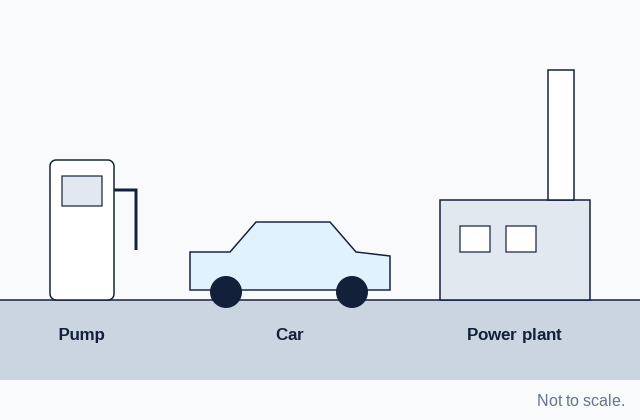 Tap to open the picture full size
Part 1 Think first A cleaner plant with no new parts
Commit to a guess first. Being wrong now makes the right idea stick better.
Predict first
A made-up city gets its electricity from a coal-burning power plant. The city wants the plant to release fewer air pollutants, but it cannot add any equipment to the plant this year. What do you predict could still cut the plant's pollutants?
In short. Reducing air pollutants means lowering how much of them engines, gasoline pumps, factories and power plants release.
- A vapor recovery nozzle on a gasoline pump keeps fumes from escaping into the air while a vehicle is fueled.
- A catalytic converter changes an engine's carbon monoxide, nitrogen oxides and hydrocarbons into less harmful carbon dioxide, nitrogen, oxygen and water.
- Wet and dry scrubbers remove particulates and gases from industrial exhaust, and coal-burning power plants also use electrostatic precipitators.
Part 2 Learn it Cutting pollutants at the source
2a. Three ways to cut pollutants
Methods to reduce air pollutants include regulatory practices, conservation practices, and alternative fuels. Each one cuts pollutants at the source: less is released in the first place.
- Regulatory practices are laws and rules that limit what may be released. Examples: a cap on the sulfur dioxide a factory may release each year, or a ban on burning trash in the open. Under the Clean Air Act, for example, the Environmental Protection Agency regulated lead, particularly in fuels (7.1).
- Conservation practices use less energy, so less fuel is burned. Fewer kilowatt-hours used means less coal or gas burned at a power plant; fewer kilometers driven means less gasoline burned.
- Alternative fuels replace a fuel with one that releases fewer pollutants. Example: natural gas in place of coal at a power plant (6.3 called natural gas the cleanest of the fossil fuels).
Quick check · Multiple choice
A made-up country requires every new car sold there to meet a limit on the nitrogen oxides its exhaust may carry. Which kind of method for reducing air pollutants is this requirement?
2b. Devices on pumps and engines
A vapor recovery nozzle is an air pollution control device on a gasoline pump that prevents fumes from escaping into the atmosphere when fueling a motor vehicle. Gasoline evaporates easily. As fuel flows into a tank, it pushes the vapor already there out of the opening. The nozzle's rubber collar seals the opening, and the vapor is drawn back through the hose instead of drifting into the air.
A catalytic converter is an air pollution control device for internal combustion engines. It sits in the exhaust pipe of a car or truck and converts pollutants into less harmful molecules:
- carbon monoxide (CO), nitrogen oxides (NOx) and hydrocarbons go in;
- carbon dioxide (), nitrogen gas (), oxygen () and water () come out.
Background: gasoline vapor is a mix of VOCs, which help form photochemical smog.
Quick check · Decide and justify
A student says a vapor recovery nozzle cuts air pollution by cleaning a car's exhaust while the car is being driven. Is the student right?
Which reason supports your answer?
2c. Devices on smokestacks
Wet and dry scrubbers are air pollution control devices that remove particulates and/or gases from industrial exhaust streams. A wet scrubber passes the exhaust through a spray or bath of liquid that captures particles and gases such as sulfur dioxide. A dry scrubber does the same job with a dry powder in place of the liquid.
Methods to reduce air pollution from coal-burning power plants include scrubbers and electrostatic precipitators. An electrostatic precipitator gives the particles in the exhaust an electric charge, then collects them on metal plates with the opposite charge. The plates are shaken now and then, and the ash that falls off is hauled away.
Both devices remove pollutants from the exhaust before it leaves the stack, so less reaches the air. Background: neither one burns less coal, which is why rules and conservation work alongside them.
Quick check · Select all
A made-up coal-burning power plant must cut both the particulates and the sulfur dioxide in its exhaust. Which two statements about its options are accurate? Pick two.
Select 2 answers, then check.
Part 3 Watch it done What a scrubber leaves
Open each step in turn, answer the why, then finish the calculation yourself.
A made-up coal plant's exhaust would carry 6,400 metric tons of sulfur dioxide a year. A wet scrubber removes 95.5% of it. How many metric tons a year still leave the stack?
Step 1 · Find the share left
of the sulfur dioxide is not removed.
Why this step?
Why does the scrubber cut what the plant releases, rather than only spreading it out?
A scrubber removes gases such as sulfur dioxide from the exhaust stream before the exhaust leaves the stack, so that sulfur dioxide never reaches the air.
Step 2 · Choose the operation
Multiply the yearly amount by the share left, written as a decimal: .
Your step · Calculate
Finish it. The exhaust would carry 6,400 metric tons of sulfur dioxide a year, and 4.5% of it is not removed. How many metric tons a year still leave the stack?
metric tons
Fewer than 300 tons leave the stack instead of 6,400. Try it asks you to name the devices on a street, then to check an account of a car's pollution controls.
Part 4 Try it Name the devices, then check an account
First fill in the devices at work in a made-up town. Then find where a student's account of a drive goes wrong.
Try it · Fill the statement
Complete the account of pollution controls in a made-up town.
On the town's streets, the in each car's exhaust pipe changes carbon monoxide into carbon dioxide, and at the edge of town the in the coal plant's exhaust gives ash particles a charge and collects them on plates.
Try it · Spot the error
A student describes a drive in a made-up car. Tap the first line that goes wrong.
Part 5 Explain it A city's cars and their converters
Write your answer first. Nothing you type here leaves this page. Then compare it with the model and each scoring point.
Free response is 40% of the exam score. This one is shaped like Question 3, Analyze an environmental problem doing calculations.
Free-response practice · Question 3 style
A made-up city has 400,000 cars. The figures are made up for practice:
- Distance each car drives in a year: 15,000 kilometers
- Carbon monoxide from a car with no working catalytic converter: 2.0 grams per kilometer
- Share of that carbon monoxide a working catalytic converter changes into less harmful gases: 90%
- 1 metric ton = 1,000,000 grams
(a) Calculate the metric tons of carbon monoxide the city's cars would release in a year if none had a working catalytic converter. Show your work.
(b) Calculate the metric tons released in a year if every car had a working converter. Show your work.
(c) Describe what a catalytic converter changes carbon monoxide, nitrogen oxides and hydrocarbons into.
(d) Explain how a regulatory practice could make sure the city's cars have working converters.
(e) Explain one other method, not a device on the car, that could reduce the carbon monoxide from the city's traffic.
Model answer
(a) kilometers a year. grams. metric tons a year.
(b) metric tons a year, since the converters change 90% of it and 10% is left.
(c) Into less harmful molecules: carbon dioxide, nitrogen gas, oxygen and water.
(d) The city could require every car to pass a yearly emissions test, so a car whose converter is missing or broken must be fixed before it can be registered.
(e) A conservation practice: more people carpool, take the bus or drive less, so less gasoline is burned. An alternative fuel, such as hydrogen in fuel cell cars, also fits.
Score your own answer. This is a self-check, not a grade. Tick each point your answer makes.
Part 6 Check yourself A coal plant adds two devices
The first two questions use the table.
A made-up coal-burning power plant adds an electrostatic precipitator and a wet scrubber to its exhaust. It burns the same amount of coal in both years. The numbers are made up for practice.
| Pollutant | Before | After |
|---|---|---|
| Carbon dioxide | 4.100 million | 4.099 million |
| Particulates | 2,400 | 72 |
| Nitrogen oxides | 3,100 | 3,040 |
| Sulfur dioxide | 9,600 | 1,344 |
Case question 1 · Multiple choice
Which statement do the data best support?
Case question 2 · Calculate
Using the table: by what percent did the plant's sulfur dioxide fall from the year before to the year after?
The rest stand on their own and do not use the case.
Check yourself · Match
Match each made-up action to the method or device it uses to reduce air pollutants.
Check yourself · Rank it
Three made-up coal-burning power plants each add a scrubber. Rank them from the most sulfur dioxide still released each year to the least.
Most sulfur dioxide still released first
Give each one a place, 1 for first. Give two the same place if they are equal.
Your ranking: none yet
Part 7 Keep it Bring back earlier ideas
Two questions from earlier topics in this unit.
First sort made-up indoor pollutants by the kind of source they come from. Then find where a student's account of radon in a farmhouse goes wrong.
From 7.5 Indoor Air Pollutants · Sort it
What kind of source does each made-up indoor pollutant come from? Tap a card, then its group.
Natural source
Human-made source
Combustion
First put the events of a made-up inversion in order. Then find where a student's account of an inversion goes wrong.
From 7.3 Thermal Inversion · Spot the error
A student describes a made-up city's winter inversions. Tap the first line that goes wrong.
In three lines
- Methods to reduce air pollutants include regulatory practices, conservation practices and alternative fuels.
- A vapor recovery nozzle keeps fumes in at the gasoline pump, and a catalytic converter changes an engine's carbon monoxide, nitrogen oxides and hydrocarbons into less harmful molecules.
- Wet and dry scrubbers remove particulates and gases from industrial exhaust, and coal plants also use electrostatic precipitators.
Exam strategy for this topic
- Section I, Multiple Choice: 80 questions in 90 minutes.
- Section II, Free Response: 3 questions in 70 minutes.
- This lesson's Explain it is shaped like free-response question 3, Analyze an environmental problem doing calculations.
- A four-function, scientific, or graphing calculator is allowed on both sections of the exam.
When a question asks how to reduce an air pollutant at its source, name a specific method and say what it does: a rule that limits it, a saving that burns less fuel, a cleaner fuel, or the device that removes or converts it.
Questions students ask
What are the main ways to reduce air pollutants?
Regulatory practices, conservation practices and alternative fuels, along with control devices such as vapor recovery nozzles, catalytic converters, scrubbers and electrostatic precipitators.
What does a catalytic converter do?
It converts carbon monoxide, nitrogen oxides and hydrocarbons in an engine's exhaust into less harmful molecules: carbon dioxide, nitrogen, oxygen and water.
How do coal-burning power plants reduce their air pollution?
With scrubbers, which remove particulates and gases such as sulfur dioxide, and electrostatic precipitators, which charge particles and collect them on plates.
Course alignment, for teachers
AP Environmental Science topic 7.6, Unit 7: Atmospheric Pollution.
- Skill 7.D: Use data and evidence to support a potential solution.
This lesson maps all 5 essential knowledge statements of the topic to the part that teaches each one: 5 are checked by a scored question. The map is in the lesson file.