Unit 7 · Topic 7.8 · about 30 minutes · 7 parts · 10 scored checks, 2 of them multiple choice, plus 2 from earlier lessons
AP Environmental Science 7.8: Noise Pollution
Unit 7: 7 to 10% of the multiple-choice section
What you'll be able to do
- Describe human activities that result in noise pollution and its effects.
Key vocabulary
| Term | What it means | The exam trap |
|---|---|---|
| Physiological stress | A measurable strain on the body, such as a racing heart or a rise in stress hormones. | It is a change in how the body works, not only a feeling of being annoyed. |
| Masking | One sound covering another so that the second cannot be heard. | Masking hides a sound without harming the ear that is listening. |
| Migratory route | The path animals travel between their seasonal homes. | A route is a path, not a destination; animals can keep the same homes and change the way between them. |
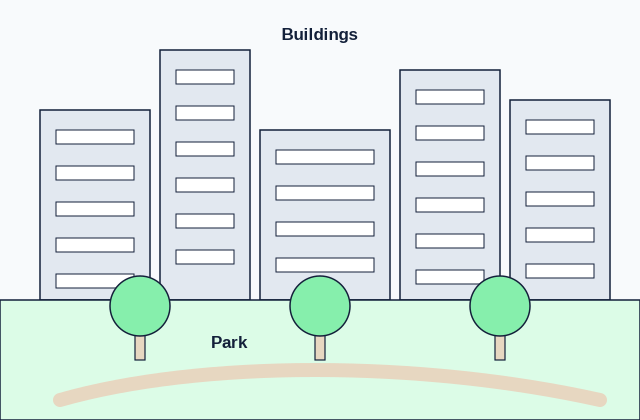 Tap to open the picture full size
Part 1 Think first Years at the jackhammer
Commit to a guess first. Being wrong now makes the right idea stick better.
Predict first
A made-up road crew member runs a jackhammer most workdays for 15 years, never wearing ear protection. What do you predict the years of loud noise could do to the worker?
In short. Noise pollution is sound from human activities, such as traffic and factories, at levels high enough to count as a pollutant.
- In cities it comes from transportation, construction, and domestic and industrial activity.
- It can mask the sounds that wild animals use to communicate or to hunt.
- It can lead migrating animals to change their routes.
Part 2 Learn it Sound as a pollutant
2a. When sound becomes pollution
Noise pollution is sound at levels high enough to cause physiological stress and hearing loss.
- Physiological stress is strain on the body itself: for example, a racing heart, a rise in the body's stress hormones, or sleep broken again and again.
- Hearing loss is damage that leaves the ears less able to pick up sound, sometimes for good.
So what makes a sound pollution is its level and what it does to the body, not whether anyone likes it. A song can be pollution if it is loud enough to cause stress or hearing loss, and an unpleasant sound that is too quiet to do either is not.
For example, a made-up bartender at a club whose speakers play very loud music night after night leaves each shift with ringing ears, and over the years loses part of their hearing. Background: sound levels are measured in decibels; the decibel figures in this lesson are made up for practice.
Quick check · Multiple choice
Which made-up sound fits the description of noise pollution?
2b. Where a city's noise comes from
Sources of noise pollution in urban areas include transportation, construction, and domestic and industrial activity.
In a city all four overlap, so a street can be loud from several of them at once, and quieting one source leaves the others.
| Source | What it covers | An example |
|---|---|---|
| Transportation | Moving people and goods | Buses pulling away from a stop |
| Construction | Building and tearing down | A concrete saw on a new site |
| Domestic activity | Life in and around homes | A gas-powered hedge trimmer |
| Industrial activity | Factories and other workplaces | A sawmill's blades cutting logs |
Quick check · Decide and justify
A made-up city bans private cars from its downtown on weekends. A student says the downtown will then have no noise pollution on weekends. Is the student right?
Which reason supports your answer?
2c. Noise and animals
Some effects of noise pollution on animals in ecological systems include stress, the masking of sounds used to communicate or hunt, damaged hearing, and causing changes to migratory routes.
- Stress: animals near loud sources can show the same kind of strain on the body as people.
- Masking: one sound covering another so it cannot be heard. Many animals call to find mates or warn of danger, and many hunt by listening for prey. Noise can drown out those sounds.
- Damaged hearing: very loud sound can harm an animal's ears.
- Changed migratory routes: a migratory route is the path animals travel between seasonal homes. Animals may avoid a noisy place and travel a different way.
For example, a made-up frog chorus in a marsh beside a new highway grows harder for females to hear over the traffic.
Quick check · Select all
A made-up highway is built through a forest. Which two effects on the forest's animals could its noise cause? Pick two.
Select 2 answers, then check.
Part 3 Watch it done How many homes did the wall help?
Open each step in turn, answer the why, then finish the calculation yourself.
A made-up highway runs past 1,250 homes. Before a sound wall was built, 48% of the homes recorded nighttime truck noise above the city's limit. After the wall, 14% did. How many fewer homes are above the limit?
Step 1 · Find the homes above the limit before
homes above the limit before the wall.
Why this step?
Why would a city set a limit on nighttime truck noise?
Sound at levels high enough causes physiological stress, such as broken sleep, and hearing loss, so noise above a set level harms the people who live with it.
Step 2 · Find the homes above the limit after
homes above the limit after the wall. Subtract to find how many fewer.
Your step · Calculate
Finish it. 600 homes were above the limit before the wall and 175 after. How many fewer homes are above the limit?
homes
Of the 1,250 homes, 425 more now sleep under the limit. The rest of the lesson turns from people to the animals that live with the same noise.
Part 4 Try it Fill in an account, then check another
First complete an account of a made-up event. Then find where a student's account goes wrong.
Try it · Fill the statement
Complete the account of a made-up fireworks show on a beach.
A shell that bursts a few meters from a spectator can leave the spectator with , and the show's booms can cause of the calls that nesting terns on the beach use to find their chicks.
Try it · Spot the error
A student describes the effects of a made-up offshore wind farm's construction on sea life. Tap the first line that goes wrong.
Part 5 Explain it Shorebirds and a new airport
Write your answer first. Nothing you type here leaves this page. Then compare it with the model and each scoring point.
Free response is 40% of the exam score. This one is shaped like Question 2, Analyze and interpret quantitative data.
Free-response practice · Question 2 style
A made-up wetland is a spring stopover where migrating shorebirds rest and feed. The counts below, taken each spring, are made up for practice. A busy airport opened beside the wetland late in 2020, after that spring's count.
- 2016: 4,200 birds
- 2018: 4,050 birds
- 2020: 3,950 birds
- 2022: 1,900 birds
- 2024: 1,300 birds
(a) Describe the trend in the shorebird counts from 2016 to 2024.
(b) Calculate the percent decrease in the count from 2018 to 2024. Show your work.
(c) Calculate the average decrease in birds per year from 2020 to 2024. Show your work.
(d) Explain one way noise from the airport could cause the change in the counts.
(e) Identify one source of noise pollution in urban areas other than transportation.
Model answer
(a) The count stayed fairly steady from 2016 to 2020, between 3,950 and 4,200, then fell sharply after the airport opened, to 1,300 by 2024.
(b) decrease.
(c) birds per year.
(d) Noise pollution can change animals' migratory routes: shorebirds may avoid the noisy wetland and stop somewhere else along their way, so fewer are counted there. (Stress, or masked calls the birds use to communicate, also fit.)
(e) Construction, such as cranes and concrete mixers at a building site. (Domestic or industrial activity also fits.)
Score your own answer. This is a self-check, not a grade. Tick each point your answer makes.
Part 6 Check yourself Songs over the traffic
The first two questions use the table.
A made-up researcher records a songbird at four woodland sites near roads with different amounts of traffic. At each site the researcher records 200 songs up close, then counts how many of the same songs a microphone 50 meters away could pick out over the background sound. The numbers are made up for practice.
| Site | Average traffic noise (decibels) | Songs picked out, of 200 |
|---|---|---|
| W | 55 | 122 |
| X | 42 | 176 |
| Y | 74 | 33 |
| Z | 68 | 71 |
Case question 1 · Multiple choice
The researcher claims that traffic noise masked the birds' songs. Which statement from the data best supports the claim?
Case question 2 · Calculate
Using the table: by what percent did the songs picked out at site Y fall short of those at site X? Give the percent to the nearest hundredth.
The rest stand on their own and do not use the case.
Check yourself · Sort it
Which urban source is each made-up noise from? Tap a card, then its group.
Transportation
Construction
Domestic activity
Industrial activity
Check yourself · Match
Match each made-up observation to the effect of noise it shows.
Part 7 Keep it Bring back earlier ideas
Two questions from earlier topics in this unit: acid rain over a made-up valley, and a student's account of radon in a farmhouse.
First complete an account of a made-up valley. Then find where a student's account of acid rain goes wrong.
From 7.7 Acid Rain · Fill the statement
Complete the account of a made-up valley.
Nitrogen oxides from the city's drift over the valley and come down as acid rain, leaving the hillside's more acidic each decade.
First sort made-up indoor pollutants by the kind of source they come from. Then find where a student's account of radon in a farmhouse goes wrong.
From 7.5 Indoor Air Pollutants · Spot the error
A student describes radon in a made-up farmhouse. Tap the first line that goes wrong.
In three lines
- Noise pollution is sound at levels high enough to cause physiological stress and hearing loss.
- Urban sources include transportation, construction, and domestic and industrial activity.
- Effects on animals include stress, masking of sounds used to communicate or hunt, damaged hearing, and changes to migratory routes.
Exam strategy for this topic
- Section I, Multiple Choice: 80 questions in 90 minutes.
- Section II, Free Response: 3 questions in 70 minutes.
- This lesson's Explain it is shaped like free-response question 2, Analyze and interpret quantitative data.
- A four-function, scientific, or graphing calculator is allowed on both sections of the exam.
When a question asks about noise pollution, say what makes it pollution (a level high enough to cause stress or hearing loss), name its urban source, and for animals name the specific effect: stress, masked sounds, damaged hearing or a changed migratory route.
Questions students ask
What is noise pollution?
Sound at levels high enough to cause physiological stress and hearing loss.
Where does noise pollution in cities come from?
Sources in urban areas include transportation, construction, and domestic and industrial activity.
How does noise pollution affect animals?
Effects include stress, the masking of sounds used to communicate or hunt, damaged hearing, and changes to migratory routes.
Course alignment, for teachers
AP Environmental Science topic 7.8, Unit 7: Atmospheric Pollution.
- Skill 3.C: Describe the author’s reasoning (use of evidence to support a claim).
This lesson maps all 3 essential knowledge statements of the topic to the part that teaches each one: 3 are checked by a scored question. The map is in the lesson file.